
- NICEIC Approved Contractor
- Fast Turnaround
What Is an EICR?
An Electrical Installation Condition Report is a formal document that records the condition of the fixed electrical installation in a property. It covers everything from the incoming supply and consumer unit through to the final circuits, sockets, switches and fixed appliances.
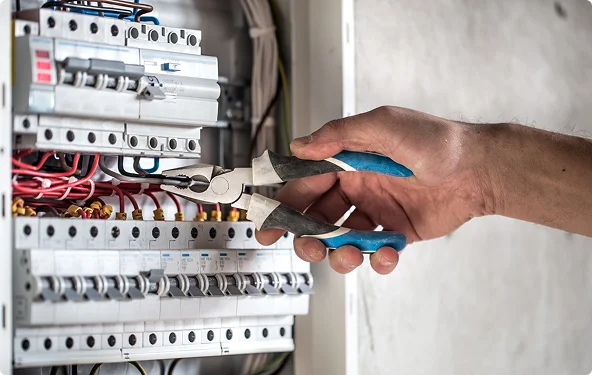
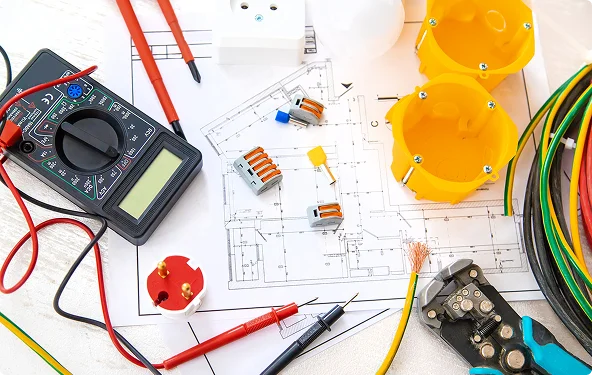
The inspection follows a set procedure defined in BS 7671 (the IET Wiring Regulations). Every circuit is tested for earth continuity, insulation resistance, polarity and loop impedance. RCD devices are tested for correct operation. The results are recorded on standard schedules and any defects are classified using a nationally recognised coding system.
An EICR is not a visual check. It is a thorough, instrument based inspection that identifies faults hidden behind walls, under floors and inside enclosures that you would never see during a normal day.

Who Needs an EICR?
1
Landlords
Since June 2020, landlords in England must have a valid EICR for every tenanted property. The report must be renewed every 5 years and a copy provided to tenants within 28 days.
2
Homeowners
While not a legal requirement, an EICR is recommended every 10 years for owner occupied properties. It is especially important if you are buying or selling, if the property has older wiring, or if you want to confirm that previous electrical work was done safely.
3
Commercial Property Owners
Businesses have a legal duty under the Electricity at Work Regulations 1989 to maintain their electrical installations in a safe condition. Regular EICRs provide evidence of compliance.
4
Letting Agents and Property Managers
If you manage rental properties on behalf of landlords, ensuring valid EICRs are in place is part of your compliance responsibility.
Understanding EICR Classification Codes
A report with no C1 or C2 codes receives a Satisfactory outcome. One or more C1 or C2 codes means the report is Unsatisfactory and remedial work is required.

C1 — Danger Present
An immediate risk to anyone using the installation. Requires urgent action. The supply to the affected circuit may need to be isolated immediately.

C2 — Potentially Dangerous
A fault that is not immediately dangerous but could become so. Remedial action is required as soon as possible.

C3 — Improvement Recommended
The installation does not fully meet current regulations but is not dangerous. Improvement is recommended but not required.
FI — Further Investigation
A potential issue was identified but could not be fully assessed during the inspection. Further investigation is needed to determine the extent and classification.
Our EICR Certificates Process
1
Book Your EICR
Share your property details and we schedule the inspection at a time that suits you or your tenants.
2
Full Electrical Inspection
Our NICEIC approved electrician tests every circuit, the consumer unit, earthing, bonding and all fixed installations to BS 7671.
3
Certificate and Report Issued
You receive your EICR with all observations categorised by standard classification codes and explained clearly.
4
Remedial Work
We quote any C1 or C2 repairs, complete the work, retest and issue an updated certificate confirming compliance.



What Our Clients Say
"Excellent service. Arrived on time, explained the issue clearly, and fixed the fault quickly. Highly recommend!"
- Sarah T, South London
"We use LEM Electrical for all our office maintenance. They are reliable, professional, and their work is top notch."
- James M, Corporate Client
"Did a full house rewire for us. The team was clean, polite, and finished ahead of schedule. Very happy."
- David R, East London
Frequently Asked Questions
How much does an EICR cost?
The cost depends on the size of the property and the number of circuits. A typical 3 bedroom house starts from around £150 to £200. We provide a fixed price quote before any work begins.
How long does an EICR take?
Most domestic EICRs take between 2 and 4 hours. Larger properties, commercial buildings and properties with complex installations will take longer.
What if my EICR is unsatisfactory?
If C1 or C2 faults are found, remedial work is required. As a landlord, you must complete the remedial work within 28 days (or sooner for C1 codes) and provide evidence to your tenants and local authority. We can carry out the remedial work and retest the affected circuits.
Do I need to prepare anything before the inspection?
Please make sure we can access the consumer unit (fuse box) and all rooms in the property. Move any furniture or stored items that block sockets or switches. The power will need to be turned off to individual circuits during testing.
Is an EICR a legal requirement for homeowners?
No, but it is strongly recommended every 10 years and when buying or selling. Mortgage lenders and insurers may request one, and it is the only way to know the true condition of your electrical installation.
Need an EICR Certificate?
Whether you need a simple repair or a full installation, our team is here to help. Get in touch for a free, no obligation quote.

